
$1,560
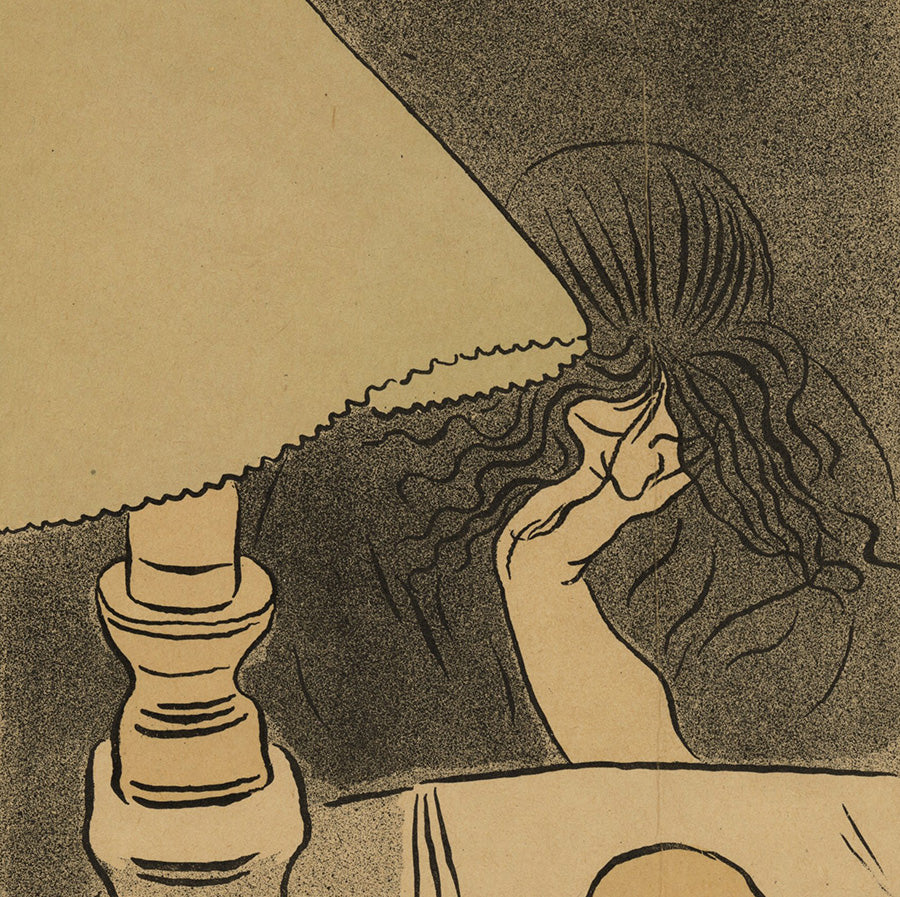
Femme et Lampe or Femme Lisant
RIPPL-RONAI, Jozsef
Color lithograph on tan wove paper. Published by La Revue Blanche in August 1894. Edition details for this publication are hard to come by, but it ...
View full detailsJózsef Rippl‑Rónai (1861–1927) was born in Kaposvár, Hungary, and developed his artistic identity in Paris from the late 1880s to the early 1900s. As Hungary’s early modernist avant-gardist and a key link between Les Nabis and the Hungarian Secession, his prints offer scholarly and aesthetic depth. He created some of his most refined color lithographs between the mid-1890s and early 1900s, often published in La Revue Blanche or by the influential publisher Ambroise Vollard. His lithographs are both meditative and intimate—portraying solitary figures (frequently women reading or in reflective states), domestic interiors, and pastoral festivals. These works reflect a distillation of his painterly style into a quieter, graphic modality. Notable for their flat color planes, rhythmic form, and symbolic composition, his prints translate domestic interiors and meditative figures into a quietly expressive, graphic idiom.
Color lithograph on tan wove paper. Published by La Revue Blanche in August 1894. Edition details for this publication are hard to come by, but it ...
View full details